Pages

Saturday, February 11, 2012

Maha Shivarathri - 20-Feb-2012


clip_image002

"Maha-Sivaratri" is a Hindu festival observed on the night of the four­teenth day of the dark half in the month of 'Magha', in Tamil 'Maasi', corresponding to the English months 'February—March', in honour of Siva, one of the Hindu Trinity, representing the destructive aspect in the universe.Though generally, the night time is considered sacred and suitable for the worship of the feminine aspect of' the deity and the day time for that of' the masculine, yet on this particular occasion Siva is worshipped during the night time, and as a matter of fact, it is specially enjoined to be observed then. The observance of the Vratha is believed to secure for the devotee immunity from the eftects of sin committed either wittingly or unwittingly. The night is divided into four quarters, each quarter going by the name of a Jama called also Yama and pious people keep awake during every one of it , worshipping Iswara.

It is said that the whole world was under destruction once and the Goddess Parvati worshipped her husband Siva then and prayed to him that the Jivas (living souls) remaining in space like particles of gold dust in a lump of wax during that long period of pralaya (deluge) night, should, when they became active once again and are in the enjoy­ment of their short day and night, have his blessings if they but worshipped him just as she did then, and her prayer was accordingly granted. The night fixed for the worship of Iswara by mortals by Parvati was named Maha-Sivaratri or the great night of Siva, since pralaya is brought about by him and hence the period is really his night from the great night or pralaya which was the cause for the origin of this Sivaratri.

The people who observe this Sivaratri- Vratha take only single meal during the day previous to the Vratha day and sleep in clean place during the night. In the morning of the Vratha day they take a bath in the waters of a sacred river, and then go to witness the divine worship in a Siva temple, and at night offer worship to Siva during every one of the four Yamams. Night long vigil on Sivaratri day,watching the sacred ablutions of Siva Linga at the temple,is the core of the Sivaratri festival.The Rudra Japa Abhisheka of Siva Linga resounds the multifacted glory of Lord Siva,who is also called Asutosh or One who is easily pleased by copius ablutions with water, the cheapest available commodity.We should remember that water in essence is Prana Sakti or life force. Such an observance of Siva Ratri will really bestow on the devotee the greatest grace of Lord Siva, the auspicious knowledge of Atma Jnana. Besides the devotee is also blessed with material prosperity the items of which are beautifully listed in the ChamakaMantra uttered on this occasion.

There is also a myth emphasizing the importance of the worship of Siva during the Sivaratri night and it is in brief as follows :

Once there was a hunter, and he one day went into the forest to procure meat for his family by hunting some animal. He wandered up and down in the forest from morning till night in search of game but was unable to shoot any. At last, when night overtook him, he climbed up a Bael tree to escape from a wild animal that was pursuing him, being roused from its lair by the hunter. The animal was lying down at the foot of the tree quite certain that the man would fall down either from sleep or from exhaustion, and that he might eat him. The hunter, exhausted as he was from his exertions and hunger, wished to scare away the animal by throwing handful of bael leaves. These leaves dripping with water on account of the recent shower, fell on a Siva-Lingam that was near. The night happened to be the Maha-Sivaratri night. He had fasted during the whole day since he could not find anything to eat. The drenching rain constituted a bath and his action of throwing the bael leaves on the Siva-Lingam, the wor­ship of Siva on the Sivaratri night. Though his actions were not intentional to worship Siva, yet he is said to have gained heaven as he had observed the Sivaratri - Vratha unwittingly.

The basic principle underlying the observance of the Maha-Sivaratri Vratha appears to be to emphasize the fact that death is sure to follow birth, night is sure to follow day,Pralaya, active cosmic life and so on, and consequently people should always bear in mind while enjoying the one its opposite and regulate their life accordingly. They should not be elated at success nor should they allow themselves to be carried away by despair at failures but always have trust in God and worship him.

Origin of Shivratri:

According to the Puranas, during the great mythical churning of the ocean called Samudra Manthan, a pot of poison emerged from the ocean. The gods and the demons were terrified as it could destroy the entire world. When they ran to Shiva for help, he in order to protect the world, drank the deadly poison but held it in his throat instead of swallowing it. This turned his throat blue, and since then he came to be known as 'Nilkantha', the blue-throated one. Shivratri celebrates this event by which Shiva saved the world.

Shivratri is considered especially auspicious for women. Married women pray for the well being of their husbands and sons, while unmarried women pray for an ideal husband like Shiva, who is the spouse of Kali, Parvati and Durga. But generally it is believed that anyone who utters the name of Shiva during Shivratri with pure devotion is freed from all sins. He or she reaches the abode of Shiva and is liberated from the cycle of birth and death.

Maha Mrityunjay Mantra

One of the ancient Sanskrit mantras, Maha Mrityunjaya Mantra is a verse of Yajurveda. It is the great death-conquering mantra, which is popularly referred to as Tryambakam Mantra, as it is identified with the three-eyed Hindu deity - Lord Shiva. The Mantra has many names and forms. It is sometimes called the Rudra Mantra, with reference to the furious face of Lord Shiva. On the other hand, when it is called the Tryambakam Mantra, then it is referred to the alluding three eyes of Lord Shiva. When it comes to life, it is Mrityunjaya Mantra is called the Mrita-Sanjivini Mantra.

Mrityunjaya Mantra holds the highest place among the Sanskrit mantras used for meditation. The recital of Mrityunjaya Mantra is beneficial for the body and soul in many ways. According to Yajurveda, if the mantra is chanted with immense concentration and devotion, then it purifies the karmas of the soul. Mental, emotional and physical health can be improvised by the regular chanting of Maha Mrityunjaya Mantra. In the following lines, we have provided the Mrityunjaya Mantra.

Mrityunjaya Mantra

Om Tryambakam Yajamahe

Sugandhim Pushtivardhanam

Urvarukamiva Bandhanan

Mrityor Mukshiya Maamritat

English Translation

"OM. We worship and adore you, O three-eyed one, O Shiva. You are sweet gladness, the fragrance of life, who nourishes us, restores our health, and causes us to thrive. As, in due time, the stem of the cucumber weakens, and the gourd is freed from the vine, so free us from attachment and death, and do not withhold immortality." - by Arthur Berriedale Keith

Monday, February 6, 2012

The End of Health Insurance Companies


By EZEKIEL J. EMANUEL and JEFFREY B. LIEBMAN

Health care reform, Health insurance, Medicine and Health

Here’s a bold prediction for the new year. By 2020, the American health insurance industry will be extinct. Insurance companies will be replaced by accountable care organizations — groups of doctors, hospitals and other health care providers who come together to provide the full range of medical care for patients.

Already, most insurance companies barely function as insurers. Most non-elderly Americans — or 60 percent of Americans with employer-provided health insurance — work for companies that are self-insured. In these cases it is the employer, not the insurance company, that assumes most of the risk of paying for the medical care of employees and their families. All that insurance companies do is process billing claims.

For individuals and small businesses, health insurance companies usually do provide insurance; they take a premium and assume financial responsibility for paying the bills. But the amount of risk sharing that is accomplished is limited because the insurers charge premiums that vary, depending on the health of an individual or a group of employees, and use their data and market power to identify healthy people to cover and unhealthy people to exclude from coverage. (The health care law’s total ban on exclusions for pre-existing conditions will begin in 2014.)

A new system is on its way, one that will make insurance companies unnecessary.

Many health insurance companies also impose barriers — like requiring prior authorization for tests and treatments and denying payment for covered services, which forces patients to appeal — to discourage patients from using the medical services for which they are insured and to attempt to avoid paying for those services. While these barriers can reduce waste by preventing unnecessary care, they can also discourage patients from receiving care they need, as well as impose administrative burdens on doctors and patients.

But thanks to the accountable care organizations provided for by the health care reform act, a new system is on its way, one that will make insurance companies unnecessary. Accountable care organizations will increase coordination of patient’s care and shift the focus of medicine away from treating sickness and toward keeping people healthy.

Because most physicians and hospitals today are paid on a fee-for-service basis, medical care is organized around treating a specific episode of illness rather than the whole patient. This system encourages overtreatment and leads to mistakes and miscommunication when patients are sent between their primary care doctors, specialists and hospitals. Indeed, under today’s payment system, investments in providing better care are doubly penalized. If a hospital hires a nurse to follow up with patients after they are discharged in order to reduce readmissions — for example, to help patients with diabetes improve blood sugar control — it must pay for the nurse, which is typically not reimbursed by insurance companies or Medicare, and it loses revenue by preventing the readmission.

In contrast, accountable care organizations will typically be paid a fixed amount per patient, along with bonuses for achieving quality targets. The organizations will make money by keeping their patients healthy and out of the hospital and by avoiding unnecessary tests, drugs and procedures. Thus, they will actually have a financial incentive to hire that nurse for follow-ups.

In addition to providing better and more efficient care, A.C.O.’s will also make health insurers superfluous. Because they will each be responsible for a large group of patients (typically more than 15,000), they will pool the risk of patients who have higher-than-average costs with those with lower costs. And with the end of fee-for-service payments, insurance companies will no longer be needed to handle complicated billing and claims processing, nor will they need to be paid a fee for doing so. Payments can flow directly from an employer, Medicare or Medicaid to the accountable care organizations. A.C.O.’s will require enhanced information systems to track patients and figure out how to deliver more effective care, but this analytic capacity will be directed at improving health outcomes, not at imposing barriers to those seeking treatment.

A.C.O.’s are not simply a return to the health maintenance organizations of the 1990s. Although in both models patients are members of a provider network with a specific group of doctors and hospitals, and both are paid primarily per member rather than per procedure or test, there are big differences between them. H.M.O.’s were often large national corporations far removed from their members. In contrast, A.C.O.’s will consist of local health care providers working as a team to take care of patients who are likely to be members for years at a time. H.M.O.’s often cut costs not by keeping people healthy but by denying patients services and by forcing doctors and hospitals to take lower payments. In the 1990s, we lacked the information technology and proven models of integrated care delivery that we have now. These advances will allow A.C.O.’s to simultaneously improve health outcomes and reduce costs.

A final bonus of A.C.O.’s is that they will lead to a better form of competition in health care markets. Today, consumers have to choose among insurance plans with a bewildering array of copayments, deductibles and annual out of pocket maximums — choices that few of us are any good at making. In the A.C.O. model, consumers will choose a primary care physician and the team of doctors and hospitals that are in the same group. Choosing a doctor and provider group is a responsibility that consumers want to have and are likely to be much better at.

A few health insurers see this asteroid coming. Wellpoint, for example, bought the clinic operator CareMore for $800 million last summer to make the transition into the A.C.O. business. Others, like the Optum unit of UnitedHealth Group, are developing data analysis services to provide to future A.C.O.’s. If they don’t want to go the way of the dinosaurs, insurance companies will have to find a new business to be in, one that is useful in the new world of coordinated care.

Sunday, February 5, 2012

Thaipusam - தைப்பூசம் - 07-Feb-2012


clip_image002

Thaipusam (தைப்பூசம்) is a Hindu festival celebrated mostly by the Tamil community on the full moon in the Tamil month of Thai (Jan/Feb). It is also referred to as Thaipooyam or Thaippooyam in the Malayalam language. Pusam refers to a star that is at its highest point during the festival. The festival commemorates both the birthday of Lord Murugan (also Subramaniam), the youngest son of Shiva and Parvati, and the occasion when Parvati gave Murugan a vel (spear) so he could vanquish the evil demon Soorapadman.

Lord Skanda (or Lord Murugan) was created during one of the battles between the Asuras and the Devas. At one point, the latter were defeated several times by the former. The Devas were unable to resist the onslaught of the Asura forces. In despair, they approached Lord Siva and entreated to give them an able leader under whose heroic leadership they might obtain victory over the Asuras. They surrendered themselves completely and prayed to Lord Siva. Siva granted their request by creating the mighty warrior, Lord Skanda, out of his own power or Achintya Shakti. He at once assumed leadership of the celestial forces, inspired them and defeated the Asura forces.

Dedicated to Lord Murugan or Kartikeya

Thaipusam is dedicated to the Hindu god Murugan, the son of Shiva and Parvati. Murugan is also known as Kartikeya, Subramaniam, Sanmukha, Shadanana, Skanda and Guha. It is believed that on this day, Goddess Parvati presented a lance to Lord Murgan to vanquish the demon army of Tarakasura and combat their evil deeds. Therefore, Thaipusam is a celebration of the victory of good over evil.

The Kavadi

Generally, people take a vow to offer the Lord a Kavadi for the sake of tiding over a great calamity. Though this might, on the face of it, appear a little mercenary, a moment's reflection will reveal that it contains in it the seed of supreme love of God. The worldly object is achieved, no doubt, and the devotee takes the Kavadi; but after the ceremony he gets so God-intoxicated that his inner spiritual being gets awakened. This is also a method that ultimately leads to the supreme state of devotion.

The Kavadi has various shapes and sizes, from the simple shape of a hawker's storehouse (a wooden stick with two baskets at each end, slung across the shoulder) to the costly palanquin structure, profusely flower-bedecked and decoratively interwoven with peacock feathers. In all cases the Kavadi has a good many brass bells adorning it and announcing it as the Kavadi-bearer draws it along. As the Kavadi-bearer very often observes silence, the bells are the only eloquent signs of a Kavadi procession.

The two baskets hanging at each end of the Kavadi contain rice, milk or other articles that the devotee has vowed to offer the Lord. The more devout among them, and especially those who do it as a Sadhana, collect these articles by begging. They travel on foot from village to village, and beg from door to door. The villagers offer their articles directly into the basket of the Kavadi. The Kavadi-bearer continues begging until the baskets are full or the avowed quantity is reached, and then offers the Kavadi to the Lord.

Some keen devotees undertake to walk barefoot from home to one of the shrines of Lord Subramanya, bearing the Kavadi all the way and collecting materials for the offering. They have to walk a hundred miles sometimes! The people who place the articles in the baskets also receive the Lord's blessings.

The Kavadi-bearer is required to observe various rules between the time he takes up the Kavadi, and the day of the offering. He has to perform elaborate ceremonies at the time of assuming the Kavadi, and at the time of offering it to the Lord. He also puts on the dress of a Pandaram, a Saivite mendicant. It consists of a saffron-coloured cloth, a conical scarlet cap, and a cane, silver-capped at both ends. Lord Siva, the Supreme Pandaram Himself, loves to wear this dress. The Pandaram lives on alms only. The bare chest of the Kavadi-bearer is covered with several rudraksha malas.

The Kavadi-bearer observes strict celibacy. Only pure, Sattwic food is taken; he abstains from all sorts of intoxicating drinks and drugs. He thinks of God all the time. Many of the Kavadi-bearers, especially those who do it as a spiritual Sadhana, impose various forms of self-torture. Some pass a sharp little spear through their tongue, which is made to protrude out of the mouth. Others may pass a spear through the cheek. This sort of piercing is done in other parts of the body also. The bearer does not shave; he grows a beard. He eats only once a day. The spear pierced through his tongue or cheek reminds him of the Lord constantly. It also prevents him from speaking. It gives him great power of endurance.

The Kavadi-bearer enjoys a high state of religious fervour. He dances in ecstasy. His very appearance is awe-inspiring; there is divine radiance on his face. Devotees often experience the state of feeling united with the Lord. Sometimes the Lord enters them and possesses them for some time.

How to Celebrate Thaipusam

On the Thaipusam day, most devotees of Lord Murugan offer him fruits and flowers of yellow or orange color - his favorite colors and also adorn dresses of the same color. Many devotees bear milk, water, fruits and floral tributes on pails hung from a yoke and carry them on their shoulders to various Murugan temples, far and near. This wooden or bamboo structure called 'Kavadi' is covered with cloth and decorated with feathers of peacock - the vehicle of Lord Murugan.

Body Piercing on Thaipusam

Many fanatical devotees go to such extent as to torture their bodies to appease the Lord. So, a major feature of Thaipusam celebrations is body piercing with hooks, skewers and small lances called 'vel'. Many of these devotees even pull chariots and heavy objects with hooks attached to their bodies. Many others pierce their tongue and cheek to impede speech and thereby attain full concentration on the Lord. Most devotees enter into a trance during such piercing due to the incessant drumming and chanting of "vel vel shakti vel."

Murugam songs –remix:

http://www.tamilfms.com/2011/07/murugan-devotional-songs-thaipusam.html

clip_image004

Friday, February 3, 2012

Thaipusam on 07-Feb-2012

clip_image002

Thaipusam is an important festival observed by the Hindus of southern India during the Tamil month of Thai (January - February). Outside of India, it is celebrated mainly by the Tamil speaking community settled in Malaysia, Singapore, South Africa, Sri Lanka and elsewhere around the world.

Dedicated to Lord Murugan or Kartikeya

Thaipusam is dedicated to the Hindu god Murugan, the son of Shiva and Parvati. Murugan is also known as Kartikeya, Subramaniam, Sanmukha, Shadanana, Skanda and Guha. It is believed that on this day, Goddess Parvati presented a lance to Lord Murgan to vanquish the demon army of Tarakasura and combat their evil deeds. Therefore, Thaipusam is a celebration of the victory of good over evil.

How to Celebrate Thaipusam

On the Thaipusam day, most devotees of Lord Murugan offer him fruits and flowers of yellow or orange color - his favorite colors and also adorn dresses of the same color. Many devotees bear milk, water, fruits and floral tributes on pails hung from a yoke and carry them on their shoulders to various Murugan temples, far and near. This wooden or bamboo structure called 'Kavadi' is covered with cloth and decorated with feathers of peacock - the vehicle of Lord Murugan.

Thaipusam in Southeast Asia

Thaipusam celebrations in Malaysia and Singapore are known for their festive fervor. The most famous Kavadi pilgrimage on the Thaipusam day takes place at the Batu Caves in Malaysia, where a large number of devotees head towards the Murugan temple in procession carrying the 'Kavadi'. This festival attracts over a million people each year at the Batu Caves, near Kuala Lampur, which houses several Hindu shrines and the 42.7 meter high statue of Lord Murugan that was unveiled in January 2006. Pilgrims need to climb 272 steps to access the temple on the hilltop. Many foreigners also take part in this Kavadi pilgrimage. Notable among them are Australian Carl Vedivella Belle, who has been taking part in the pilgrimage for more than a decade, and German Rainer Krieg, who went on his first Kavadi in the 1970s.

Body Piercing on Thaipusam

Many fanatical devotees go to such extent as to torture their bodies to appease the Lord. So, a major feature of Thaipusam celebrations is body piercing with hooks, skewers and small lances called 'vel'. Many of these devotees even pull chariots and heavy objects with hooks attached to their bodies. Many others pierce their tongue and cheek to impede speech and thereby attain full concentration on the Lord. Most devotees enter into a trance during such piercing due to the incessant drumming and chanting of "vel vel shakti vel."

murugan_batucaves

Tuesday, January 31, 2012

Arudra Darisanam - at The Five Cosmic Dance Halls


clip_image001

The pre-dawn hours of the full moon night, in the month with the longest nightsin the year (coinciding with the asterism of Tiruvadirai in the tamil month of Margazhi) marks the auspicious time for Arudra Darisanam - of Nataraja in Saivite temples all over Tamilnadu. Arudra Darisanam, this year falls on December 23, 1999. Coincidentally the last full moon of the millennium falls on the last  winter solstice of the millennium.

This celebration is marked by abhishekams to Nataraja and his consort Sivakami during the full moon night, and worship services such as the Deepa Aradhanai to Natarajar amidst the chanting of sanskrit and tamil hymns and the waving of lamps, in the pre-dawn hours, when the moon still shines bright, an enactment of the dance of Shiva, and a grand procession through the processional streets.

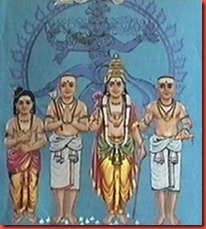
Manikka Vaachakar, a Saivite saint of the first millennium CE (the author of celebrated works such as Tiruvaachakam, Tiruvempaavai and Tiruppalliezhuchi), was closely associated with the Chidambaram Natarajar temple, and is believed to have merged with Natarajar, in the central shrine there. The Manikkavaachakar festival, involving the chanting of the Tiruvempaavai, and a procession of his image, is also celebrated in several of the Saivite temples throughout Tamilnadu.
clip_image002

Although there is a shrine to Natarajar, in virtually all of the Saivite temples in Tamilnadu, five of these are considered to be the Pancha Sabhais or the five cosmic dance halls of Shiva. The five dance halls are The Hall of Gold - Kanakasabha at Chidambaram, The Hall of Silver Velli Sabhai at Madurai, The Hall of Rubies - Ratnasabha at Tiruvalankadu, The Hall of Copper - Tamrasabha at Tirunelveli andThe Hall of Pictures - Chitrasabha Kutralam

Festivities: Arudra Darisanam at Tiruvalankaadu enshrining Nataraja in the Oordhva taandava posture, is the grandest festival here in this obscure village near Chennai, attracting devotees from the neighboring villages. The Velli Sabhai or the silver hall at the Meenakshi Sundareswarar temple at Madurai, bears a stone image of Nataraja and a festival image, both with their right foot raised (in response to pleas by a Pandya ruler, who was appalled by the thought of Nataraja's right foot becoming weary, thanks to his constant dance, with his left foot raised.)

The Periya Sabhapati shrine, the Sandana Sabhapati shrine are scenes of festivity at the Nellaiappar temple during Arudra darisanam. The festival image of Natarajar is housed in the ornate Tamra Sabha, and the cosmic dance of Shiva is enacted on the occasion. At Kutralam, the festival image of Nataraja is taken from the Kutralanathar temple to the Chitra Sabha, and the Taandava Deepa Araadhanai is performed there.

Arudra Darisanam festival at Tiruvarur has been referred to in the hymns of the Tevaram saints (7th century). Also mentioned in the Poompaavai patikam of Tirugnanasambandar are the Arudra Darisanam celebrations in the Tirumayilai Shivastalam (the Kapaaleeswarar temple in the heart of the modern city of Chennai).

Other Nataraja shrines of significance:

The Kudandaikkeezhkottam houses  a grand shrine to Natarajar, and so does the Patteeswarar temple at Perur near Coimbatore. The Chandramouleeswarar temple at Tiruvakkarai near Villuppuram features Natarajar with his right foot raised. Utthirakosamangai near Rameswaram, revered by the hymns of Manikkavaachakar, is also known for its grand shrine to Natarajar and is the scene of grand festivities during Margazhi Tiruvaadirai.

The grandest of all these festivities happens at the Natarajar temple at Chidambaram, where the Margazhi Bhramotsavam, or annual festival is celebrated for a period of 10 days. Hundreds of thousands congregate from far and wide to witness the climax of this festival on the day of Arudra Darisanam.

The first day of festivities is marked by the hoisting of the temple flag, and a procession of the images of the  Pancha Murthys (Somaskandar, Ambal, Vinayakar, Subramanyar and Chandikeswarar). The fifth day of the festival is considered to be of great significance and is referred to as the 'Teruvadaichaan tiruvizha'. The seventh day, is marked by a procession on the Golden Kailasam and the silver elephant mounts. The eighth day witnesses a procession of Bhikshatanar commemorating   legends associated Shiva's and Vishnu's trip through Dhaarukaavanam in the guise of Bhikshaatanar and Mohini.

It is only on the ninth day, that the image of Natarajar from the central shrine is taken out in procession in a grand chariot through the streets surrounding the temple. Tens of thousands of devotees drag the massive chariots through the Maada veedhis (processional streets), following which, the images of Natarajar and Sivakami are brought to the 1000 pillared hall of the vast temple.

In the pre-dawn hours of the next day, under the full moon, an abhishekam is offered to the images of Natarajar and Sivakami in the 1000 pillared hall (the Raja Sabha), followed by a Royal Audience in the same venue, where thousands of devotees line up for a fleeting glimpse of Natarajar. The cosmic dance of Shiva is enacted later that afternoon, featuring the revered images of Nataraja and Sivakami decked in regal finery; the images are then taken back to the innermost sanctum.

Manikkavaachakar's association with Chidambaram is celebrated throughout the festival. Allprocessions are led by an image of Manikkavaachakar. The Tiruvempaavai hymns composed by the saint are chanted every evening, when an image of the saint is brought to the shrine of Nataraja from the Deva Sabha and placed in front of the Kanakasabha. Each of the 20 Tiruvempaavai is chanted by a congregation of hundreds of devotees led by an Oduvaar; and at the end of each

clip_image004

verse, temple bells are rung, and lamps are waved. The image of Manikkavaachakar is taken back to the Deva Sabha at the culmination of the recitation.

Visit the Adiyaar section of the Saiva Siddhanta website for more information on the works of Manikkavaachakar. The Saiva Siddhanta website contains the hymns of Tiruvempaavai and Tiruppalliezhuchi and Tiruvaachakam.

Arudra Darshan ( Chidambara Raghasiam)
 

clip_image005

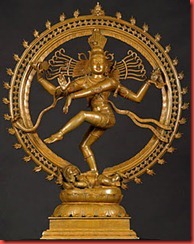
Arudra Darshan is the festival celebrated in the temples of Lord Shiva, among which Chidambaram (Tamilnadu). The image of the dancing Shiva - Nadaraja originated from here. The image of Nadaraja symbolizes activity and stillness together, it's dancing but it's a still dance. He is the unmoved mover, he doesn't move but he is himself very quite and silent. The term Chidambaram means the sky of consciousness. Chit-am-bara. It is where consciousness originated and he dances and the dancing is the symbol of activity. And the activity is not just physical activity but also a mental activity.The pre-dawn hours of the Full Moon night in the solar month of Dhanus with the longest nights in the year, marks the auspicious time for Arudra Darshan. This falls on the day ruled by the star Arudra / Thiruvadhirai (Orion), which designates a golden red, flame, representing Lord Shiva Himself. It is in the form of light that the Lord performs His functions with ecstatic dance. The cosmic dance of Lord Shiva is enacted on that day, featuring the revered images of Lord Nadaraja and His consort Sivakami decked in regal finery. The deities are taken back to the Sanctum Sanctorum. Chidambaram temple houses one of the Pancha Sabhai.e., the fire cosmic dance-halls of Lord Shiva. Abishekam is performed to the Lord on thds day. A delicious sweet preparation, known as Naivedya and distributed to devotees as prasad.

Lord Shiva Represent Nadaraja

Lord Shiva's cosmic dance is represented as `Nadaraja' (Lord of dance). The cosmic dance is known as dance of bliss (Anandha Thandavam). Lord Shiva performs five most important functions to keep the world alive. They include creation, protection, destruction, embodiment and saving with grace. Lord Nadaraja's cosmic dance pose represents all these five activities – the hourglass shaped drum held in his upper right hand by the Lord represents the function `creation'; the second right hand gesture symbolising `fear not' represents `protection'; the fire held in the upper left hand represents `destruction'; the second left hand points towards raised foot signifies liberation from successive birth; the foot planted on the earth represents Lord's `embodiment' function; and finally the foot held aloft also symbolises the `grace'. The dwarf demon lies at the bottom of the planted foot signifies ignorance. The flames surrounding the lord represent the universe. The snake found around the Lord's waist signifies yogic energy (kundalini or prana-sakti). The cosmic dance form of Lord Nadaraja represents the continuous cycle of creation of soul, protection of soul, destruction of soul, embodiment of soul and liberation of the soul from successive birth. Lord Nadaraja dances with his consort Devi Sivakami. In fact the Lord derives energy from his consort Shakti. Shakti means energy.


clip_image007

Cosmic Dance

From puranas we learn that on this holy day Lord Shiva has performed this blissful cosmic dance in front of his two ardent devotees - Vyagrapadha and Adhisesha (Lord Adhisesha is the five headed serpent on whose body Lord Vishnu lays down). The subjects of Lord Shiva also witnessed this dance. They wanted to celebrate this day as `Arudhra Darisanam' or cosmic dance of Lord Nadaraja. They wanted to seek the grace of the Lord for protecting the cosmos with his grace.

The destruction is a part of evolution. Every day we sleep or die to wake up fresh. The ‘shivam’ or the intelligence of God inside us takes care of the need to destroy cells so that new ones are born. 

Five Holy Halls (Sabais) of Lord Nadaraja

The five holy shrines of Lord Nadaraja are located in five places in Tamil Nadu i.e., Lord Shiva temple, Thiruvelankadu, Rathna sabai (Hall of Ruby), Chidambaram, Lord Nadaraja temple Kanaka sabai (Hall of Gold) Madurai, Rajitha sabai (Hall of silver), Thirunelveli, Lord Nellaiyappar temple, Thamira sabai (Hall of Copper), Courtallam, Lord Kurtalanathar, Chitra sabai (Hall of Artistic work).

There is one life size icon of Lord Nadaraja carved in emerald stone. The Lord Shiva shrine is called Uthirakosamangai, located near Rameswaram, Tamil Nadu. The prime deity is Lord Mangalanathar. It is an ancient temple. Saint Manickavasakar (His work Thiruvasagam) stayed here for some time. The emerald icon would be covered with sandal paste. On Arudhra Darshanday the paste is removed and the Lord will bathed with holy water and poojawill be performed. Again the Lord will be covered with sandal paste.


In all Shiva temples there will be sanctum sanctorum for Lord Nadaraja. There will be abhishekam (bathing the prime deity) and pooja for six times in a day in very temples. On the day of Arudhra Darshan there will abhishekam and pooja on the early morning of the full moon night.

The holy shrine Chidambaram (located in Cuddalore district, Tamil Nadu) is considered as foremost important from Saivites point of view. The prime deity is Lord Nadaraja and his consort Devi Sivakami. The temple's annual festival Margazhi Bhramotsavamwill be celebrated for ten days. It is one of the very important festivals. On this holy day at Chidambaram more than two lakh devotees will congregate to witness tenthday events of Arudhra Darshan, the most important festival. The holy abhishekam and pooja will be performed and the Lord and His consort will be taken as procession. During the procession the devotees (oothuvar) will recite the devotional holy hymns from "Thevaram", "Thiruvasagam" and "Thiruvempavai".


clip_image009

Chidambara Raghasiam

Mythology:


Lord Nataraja, Lord of Dance, Dance of Destruction

In the deodar forest lived sages who had spent their lives studying the cosmos, seeking the supreme truth. As time passed the sages deluded themselves with self-importance and their heads swelled with pride. They claimed they had renounced the world but secretly they sought all the pleasures of a life of luxury. They preached renunciation but practiced every from of sensual indulgence.

On Arudra day our Moon, Earth and Orion star groups will be in a straight vertical line in their position and help us sending grace light to change our mind and by changing our mind to change our life. 

To teach the sages a lesson Shiva arrived in the form of a handsome young hermit. Seduced by his beauty the sages and their wives ran after him. The sages held Shiva responsible for their own lack of restraint. They decided to destroy this temptation. With their magic powers they created a tiger, a serpent and a goblin and set them upon Shiva. Shiva skinned the tiger alive, wore the serpent around his neck and laughing, jumped on the goblin and began dancing on his back. This stunned the sages. He continued to dance wildly issuing tremors throughout the world, shaking the heavens and splitting the mountains. The gods abandoned the heavens to see the dance. As Shiva danced the sages realized that Shiva had flayed the tiger of their ambition, tamed the serpent of their passion and crushed the goblin of their ego. His dance captured the rhythm of life, the cosmic cycle of generation, organization and destruction. It encapsulated the essence of cosmic truth or santana dharma.


clip_image011

In his hands Shiva as Lord Nadaraja holds a drum or dhamru that makes the final sound of death as well as the primeval vibrations of life. In his left hand Nadaraja holds Agni, a fire that burns and destroys yet also illuminates and energizes. Around him is a fiery prahabhamandala, which is the great wheel of samsara filled with the infinite cycle of births and rebirths.

The sages looked at Shiva in awe. He came be known as Shiva Nadaraja the lord of Dance.
Did You Know?

Arudra is the star that names one of the nathe 27 lunar mansions of Hindu astrology. It is known as Shiva's star, a cosmic representation of His third eyes, red and intense.Called Betelgeuse in the West (a medieval Arabic name), it fascinates and consternates modern astronomers. Though it is one of the most studied of suns, it defies description, as it changes in brightness, size and even shape with rythmic gusto.

Scientists call Arudra "mysterious" and "elusive" in their published works, informally calling this massive orb "the dancing star." Hindus might find the name apt - after all, Siva is Nataraja, King if Dance.

Arudra is part of the constelation of Orion, shinning as the brightest red star in the sky. Because of its blazing choreography, there is no certainty about the latest calculations point to around 600 light-years. Siva's star is colosal. For sake of camparison, if it were the size a football stadium, Earth would be a spec of dust, and the Sun no larger than a mango.

Arudra is nearing a transitional point in its evolution. Tomorrow, perhaps, or several thousand years from now - it will enter a supernova stage. In that act, marking the height of his cosmic performance, Arudra will convert most of itself into light and cosmic rays, sending its energy out to the universe in a blinding flash. When it will outshine the full moon in our sky for months and be visible even during the day.

After that, Arudra will be a small neytron star, unimaginably dense, spinning incredibly fast. Just a cup of matter from a neutron star's core weighs more than all the mountains of the Himalas combined.

Mantra to chant at the time of the birth of Shiva during the Arudra Darshan day is Om / Hmmm SiVaYaNaMa to help you to get rid of your old consciousness and establish a divine consciousness.

Si Va Ya Na Ma

Si Va Ya Na Ma

Si VaYa Na Ma

Rangoli - Kolam


What is Rangoli?

'Rangoli' is a sanskrit word which means a creative expression of art through the use of color.

When,Why and How is Rangoli applied?

In ancient India , rangolis were used to decorate the entrances of homes, a floor-painting which provided a warm and colourful welcome to visitors.

In a rangoli, powdered colors are sprinkled on cleaned and dusted floors to form decorations. The colored powder is usually applied 'freehand' by letting it run from the gap formed by pinching the thumb and the forefinger. One important point is that the entire pattern must be an unbroken line, with no gaps to be left anywhere for evil spirits to enter and thus are they prevented from entering the inside of the home.

In Indian culture, all guests and visitors occupy a very special place, It is said " Atithi Devo Bhava" (Guest is equal to God) and a rangoli is an expression of this warm hospitality.

The Diwali festival is widely celebrated with rangoli, since at this time, people visit each other's homes to exchange greetings and sweets. It is a tradition to paint a Rangoli at the entrance of one's home during Diwali. This is done because it is believed that Goddess Lakshmi visits well-lit and decorated homes on Diwali to bless its members. Therefore, people make colorful Rangolis to welcome this benign Goddess and to usher in the New Year with color in their life. Rangoli also has a religious significance, enhancing the beauty of the surroundings and spreading joy and happiness all around. Women learn to make Rangolis from an early age and it is almost like a family heirloom passed through the ages. Rangoli Patterns are usually designed to resemble Nature like Peacocks, flowers, swans, mangos and creepers. Traditionally the colors were derived from natural sources like barks of trees, flowers and roots. However today they are synthetically manufactured. Besides that a host of other ingredients like rice, chili, turmeric, cereal and pulses too are used to further enhance the beauty of the Rangoli and to create a 3-D effect. Rangolis can be vivid three-dimensional art complete with shadings or they can be the traditional plain, yet as beautiful, two-dimensional designs.

What is a Kolam?

In the South of India Rangoli is known as Kolam. Kolams are thought to bestow prosperity to the homes. For special occasions limestone and red brick powder to contrast are also used. Though kolams are usually done with dry rice flour, for longevity, dilute rice paste or even paints are also used. Modern interpretations have accommodated chalk, and the latest "technology" in kolams are actually vinyl stickers (that defeat the original purpose). When people get married, the ritual kolam patterns created for the occasion can stretch all the way down the street. Patterns are often passed on generation to generation, mother to daughter.

Kolam is not so flamboyant as its other Indian contemporary, Rangoli, which is extremely colorful. However, the beauty of a kolam, bordered with blood-red "kaavi" (red brick paste) is also considered exceptional.

Evolution of the Rangoli(Kolam)

Techniques have evolved over time and now the use of the cone, sieve and funnel are popular. A few very talented artists actually throw the color, and the end results are stunning works of art. The materials can be virtually anything that fancies the rangoli maker, but more traditionally it is 'chiroli' marble dust to which pigments have been added. Finely ground maize (corn) flour which has been subsequently 'dyed', grass and gravel have also been used. Petals of flowers, grains and pulses have been used to form attractive and unusual designs.There have been some innovations in the Rangoli making it look more exotic and increasing the aesthetic beauty of the Rangoli. Some of the rare varieties are the floating rangoli, 3-D kolam, funnel kolam, stencil kolam, portrait kolam and bubble kolam

Floating Rangolis/Kolams

What is a floating Rangoli? This is a new and interesting concept in Rangoli. It was discovered by some artistic people that water kept in a large Urn or Urali(a traditionally used wide mouthed flat & thick & flat bottomed pan vessel usually used for cooking (can be metal or made of Terracota or clay also) also becomes a surface for putting rangolis. So the powder is dropped in an artistic way on this surface to make patterns, Colors added give the picture beauty. Even Flowers can be added. But there is one condition though, the Urn or Urali cannot be moved or shaken for if it is shaken then the entire work of art is mixed with the water. As the powder or flowers float in the water they are called as floating rangolis.

The powders used for floating rangolis are not the usual rangoli powders that are available in the market as they may dissolve in the water so a different type of powder has to be used which will easily float in the water. A different base is used to make these rangoli powders, If the base is light like saw dust, it can be used to make floating rangoli on the surface of stagnant water. If a rangoli is to be made on water, the color should preferably be insoluble in water. I guess, Rangoli competitions held all over India have spurted the youth to discover new and innovative ways of applying Rangoli, Thus, giving it a whole new dimension.

Here's an interesting read on floating rangolis (excerpts from an article in the newspaper):

Those days have gone when Rangoli used to be done with simple dots and a free hand. After years of practice, an artist in Rajkot has come up with varieties of 'Rangoli' that has left even the president of India stunned during his visit to Rajkot.

Rangoli on water, under water and in the middle of water is something that artist Pradeep Dave is an expert at. This year, he tried something new and has balanced a Rangoli on Peacock's feathers. But what has taken everyone by surprise is the Rangoli that balances itself on air.According to Dave, this is not magic but a fine combination of Art and Science. Dave has not taken any formal education on making Rangoli but it was just through practice and the application of Science that has help him through his various experiments of making varieties of Rangoli. It was in 1986 that he first made a Rangoli inside water. Then after years of practice he could make it on surface of water and after three years of research he could finally do it in middle of water.

According to Dave, doing Rangoli at the bottom of water is easy, but doing it on the surface of water is the toughest job because the entire Rangoli is done without help of any support or base drawing. A Rangoli in water takes a minimum of eight to nine hours depending upon the detailing of the drawing. This New Year, Dave has made a total of 13 varieties of Rangoli. "After three years of reasearch I was successful in making a rangoli between water.According to science, things either flow or sink in water.But this rangoli neither flows nor sinks.I have named it Trishanku. Every year, I try to make a new rangoli," said Dave. One can see a Taj Mahal inside water or a portrait of Ramkrishna Paramhansa, Amitabh Bachchhan and even Narendra Modi. Where the Taj Mahal took around 27 hours for Dave to complete the portraits have taken some 20 hours each. A Rangoli done in the shape of a carpet can be easily misunderstood as a real one. Dave knows some 45 different types of Rangoli, which includes on the walls and even on the roof. Rangoli done inside water can remain intact for around 15 days if preserved properly. Dave made a rangoli of the president of India, Dr. Abdul Kalam inside water , during his visit to Rajkot, he was not only surprised but was stunned to see a fine combination of art and science. The rangolis made by Dave have been kept open for public and every day a large number of people flock his residence to see these rangolis. Some could not believe even with their naked eyes that the rangoli has been done with the help of gypsum colours or a poster placed inside the water. "These are very good.It is so difficult to make an ordinary rangoli and we wonder how he has made a rangoli on water," said Disha Mehta, a visitor. "I never thought that it is possible to make a rangoli inside water.It is good. All colours and shades are also very nice," said Beena Joshi, another visitor. According to Dave, there is no technique but simple rules of science that he follows. All that he uses is gypsum colours and oil for making rangoli inside water. While the Rangoli placed on feather and in air is done with extremely fine colours that weighs less that the feathers. Dave through his art now aims to enter his name in the Limca books of Records and Guinness Book of World Records. (ANI)

3-D Rangolis/Kolams

3-dimensional. A graphic display of depth, width, and height. There are several ways to make a rangoli like using colored petals of flowers arranged on ground OR on still water. Rangoli is also drawn on sticky hot wax using sandy powders (where it is impossible to swipe the color powder once it is filled) and immersed under shallow water to get the 3D magnified effect. Some artists use the 3-D effect for borders alone while others create beautiful designs using grains and beads entirely. Coloured powder can be directly used for fancy decorations, but for detailed work, generally the material is a coarse grained powder base into which colors are mixed. The base is chosen to be coarse so that it can be gripped well and sprinkled with good control. The base can be sand, marble dust, saw dust brick dust or other materials. The colors generally are very fine pigment podwers like gulal/aabir available for Holi or colors (mentioned above) specially sold for rangoli in South India. Various day to day colored powders like indigo used for cloth staining, spices like turmeric, chili, rawa, rice flour, flour of wheat etc are also variously used. Powder colors can be simply mixed into the base. If the base is light like saw dust, it can be used to make floating rangoli on the surface of stagnant water. Sometimes saw-dust or sand is soaked into waterbased color and dried to give various tints. However that probably cannot be used on water. If a rangoli is to be made on water, the color should preferably be insoluble in water.

Funnel Rangolis/Kolams

If you find it hard to make diwali rangoli designs with hand, use a small nozzled funnel, control the flow of the filled rangoli with thumb or middle finger, and make desired designs easily. Do not use pure colours without rangoli in this way because they will not fall through easily. If you find it hard to make diwali rangoli designs with hand, use a small nozzled funnel, control the flow of the filled rangoli with thumb or middle finger, and make desired designs easily. Do not use pure colours without rangoli in this way because they will not fall through easily.

Tibetan Sand Painting or Mandala Sand Painting

This Floor Painting style is a part of Tibetan Tantric Art tradition. The Tibetans call it dul-tson-kyil-khor, which literally means "mandala of colored powders." Millions of grains of sand are painstakingly laid into place on a flat platform over a period of days or weeks. The heartbreaking part of this ritual is that after days of determined hard work and perseverance the very monks who work on these paintings have to destroy them.

The beginning of mandala sand painting is an auspicious occasion which is marked by a ceremonial ritual. In this opening ceremony the lamas, or Tibetan priests, gather in front of the painting the site and call forth the supreme power of goodness. This is done by the means of chanting, music, and mantra recitation.
In the first day of the painting process the outline of the painting is drawn on a wooden board. In the consequent days the outlines are layersed with different colored sands. The sand is poured from a metal funnel called chak-pur. This funnel is an important part of the tradition too. The monks involved in the apintings hold a funnel in their hand and run a metal rod on its surface. The vibrations caused by the metal rod makes the sand flow like water from the funnel mouth.

These paintings follow the prescribed Mandala motifs. A Mandala is a symbolic geometric pattern, which is a metaphysical or symbolical representation of the cosmos, a microcosm of the universe from the human perspective. The center of the Mandala can be used as the focal point of meditation. In fact the complex but symmetric web of structures around the center draws one's eyes towards the focal point. Make dots on the ground using a small amount of flour. Connect the dots by using small amounts of flour to trickle between your thumb and forefinger but for children or people who find it difficult to use hands to do it or aren't familiar with making rangoli before u can use a large funnel and tap the flour out of the end of the funnel to make the line. There are many items you can use to make a funnel, depending on your resources.
For example:
- Rework a sundae spoon by bending the handle inwards to form a funnel or tube, scoop the sand using the spoon side and tilt it to pour the sand through the tube.
- Or glue a straw to a sundae spoon flaring it out into the spoon so that it catches all the sand in the spoon.
- Or fashion your own sand painting tool out of soft metal like tin or aluminium or plastic or wood.

MAKE YOUR OWN RANGOLI

1. Choose a simple design and the appropriate colours.

2. You will need the following basic ingredients: A hard board of size 30 × 30 cm; Pencil/Chalk; Ruler; Spoons; Small funnel, with a very thin spout; sieve;

3. For even spreading, make a small cone or tube, and at the tip place a thin sieve/gauze. This will help considerably in even spreading of colours and minimise wastage. A stiff paper cone is ideal for margins, dots and borders.

4. Buy rangoli colours from Indian shops or from India. Alternatively, make them yourself.

5. Spread the colours by hand, tube or cone as necessary to make your rangoli.

P.S. I made a mention of the Tibetan Sand paintings as the Funnel Kolam is an idea inspired by this.

Bubble Rangoli/Bubble Kolam

Kolam as connected bubbles

The trick is to use the symmetry of the kolam. The typical symmetry used is the cyclic symmetry, as shown in the above figure. This is also the most complex and the most impressive one, apart from being the most common (the others are reflection symmetry between the halves). This reduces the problem of remembering the whole kolam, to one of remembering just one quarter of it. Of course, nothing stops us from creating a completely asymmetrical one, but I haven't seen it in daily use (maybe I should explore more of that, now that it is easy with this program).

I think this symmetry part has been used extensively by the kolam creators. But, this is not enough. You need more patterns to make kolam drawing as simple as connecting points with line. If you see the above figure, I've specifically shaded the closed areas that contain the dots ('Pullie' in Tamil). This way you can see clearly that a kolam is just a connected network of many 'bubbles' (if you can call these shaded parts so). This is important because, this way you only have to join different dots creatively, and the regulation part of weaving the curve around them could be automated. This is not to say that joining dots is easy, because traditionally only certain dot-connections are considered beautiful. You are free to explore, but don't blame me, if your mom gives an indifferent glance to your masterpiece. The above are some frequent and pleasing connections of dots.

You can see the connecting lines in green in the above figure. The darker shaded bubbles, is only to highlight that, if a dot is connected to one or more dots, the bubble will be connected similarly. I have highlighted one vertex each for degree 1,2,3 and 4.

Stencil Rangolis

This craft involves the cutting of an intricate stencil depicting scenes ... the use of this paper stencil is then made in creating a rangoli. The stencil Rangoli is a welcome addition for those people who don't know how to put Rangoli or who have never attempted to do it but still want the real effect of a Rangoli. Since you are using colors it still stands as an ideal source of colorful welcome to the festive celebrations. For the beginners who want a beautiful rangoli can do so by getting themselves a rangoli color-and-stencil kit, now easily available, also available are roller stencils just put the color or plain white rangoli powder inside the pipe of the roller whose one side is open and one side is closed and roll it on the floor for beautiful patterns.

Portrait Rangoli

Portrait Rangoli means, portraits of people drawn with rangoli powders, it can be Portraits of Gods, people sometimes inanimate objects or nature. Portrait Rangoli looks very realistic and is more like a drawing on paper. We can see some portrait rangoli on the streets, where artists paint pictures of God on the pavement and collect money for their art.

I am sure members will find this article interesting. Please do write to me your views and if u know about any more types of rare rangolis/kolams.

http://www.ikolam.com/
http://www.pongalfestival.org/pongal-kolam-designs.html
http://www.onlinebangalore.com/life/women/rangoli/rangoli.html
http://www.geocities.com/Athens/5180/kolam.html
http://en.wikipedia.org/wiki/Rangoli
http://www.panchangam.com/rang.htm
http://images.google.co.in/images?q=rangoli&hl=en&pwst=1&um=1&sa=X&oi=images&ct=title

clip_image002

clip_image004

clip_image006

clip_image008


A colorful Rangoli (patterns made by ...
500 x 330 - 43k - jpg

Diwali lamp. Rangoli
2048 x 1536 - 662k - jpg

thumbs/01_Rangoli.jpg
698 x 523 - 63k - jpg
www.obscure.org

DIY Rangoli Pattern 1 ...
350 x 444 - 35k - jpg
www.snaithprimary.eril.net


clip_image014

clip_image016

clip_image018

clip_image020

Rangoli V
529 x 528 - 48k - jpg
www.4to40.com

Rangoli craft for kids
346 x 344 - 13k - gif
www.chennaionline.com

Rangoli Patterns Design
312 x 312 - 12k - gif
www.diwalifestival.org

Rangoli Patterns Design
312 x 312 - 15k - gif
www.diwalifestival.org

clip_image022

clip_image024

clip_image026

Example 9: here is a rangoli pattern ...
640 x 477 - 59k - jpg
www.burevalley.norfolk.sch.uk

Onam Festival - Rangoli - Kerala
434 x 269 - 33k - jpg
www.shubhyatra.com

rangoli. FileDateTime : 1161276738
1024 x 768 - 152k - jpg

clip_image028

clip_image030

clip_image032

clip_image034


Rangoli is wall art as well as floor ...
401 x 284 - 29k - jpg
www.mehndidesigns.com

The Finished Rangoli Pattern
600 x 537 - 71k - jpg
www.newmillsweb.com

Example 4: this rangoli design ...
480 x 360 - 33k - jpg
home.earthlink.net

Rangoli is one of the most popular ...
179 x 163 - 9k - jpg
www.indianhospitality.com


clip_image038

clip_image040

clip_image042

clip_image044


Rangoli
543 x 600 - 28k - gif
mehandi27.com

Rangoli /Rangawali
640 x 480 - 47k - jpg
www2.bremen.de

... from Coloured Flour (Rangoli), ...
319 x 425 - 40k
www.allposters.com

Indian rangoli pattern
380 x 380 - 42k - jpg
www.istockphoto.com


clip_image046

clip_image048

clip_image036


The Art of Rangoli: Ranbir Kaur ...
331 x 237 - 60k - gif
www.womadelaide.com.au


Rangoli Design 2
400 x 400 - 13gif
i

Rangoli design - a simple symetrical ...
280 x 280 - 7k - gif
www.lbcma.org.uk